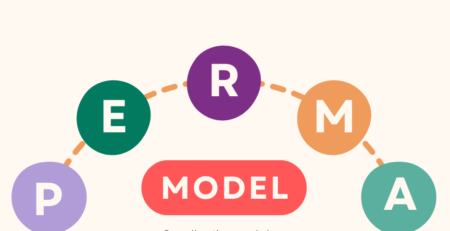
It is easy to think that wellbeing comes from fixing everything that is going wrong. When life feels difficult, we naturally look for what needs to change, the areas where we are falling short, or what we wish were different. But psychologist Martin Seligman offers another way of looking at wellbeing: rather than focusing only on what is missing, we can also pay attention to what is already working.
This is one of the ideas behind psychologist Martin Seligman’s PERMA model, and it offers a way of looking at the different parts of our lives and asking: What is already working for me, and could I do a little more of it?
So What Actually Is the PERMA Model?
PERMA stands for Positive Emotion, Engagement, Relationships, Meaning and Accomplishment. Rather than chasing a vague idea of “happiness,” Seligman broke wellbeing down into five measurable pillars that, together, help a person flourish.
Positive Emotion
Positive emotions are not about being happy all the time. They can include gratitude, joy, hope, contentment, amusement and moments of calm.
Perhaps it is enjoying your morning coffee, laughing with a friend, listening to a favourite song or noticing something that went well during the day. Small moments matter.
Engagement
When was the last time you became so absorbed in something that you forgot to check the time?
Engagement is about being fully involved in activities that interest us and make use of our strengths. It could be cooking, gardening, creating something, playing sports or simply getting lost in a good book.
Relationships
Wellbeing is rarely something we experience entirely on our own. Our relationships with family, friends, colleagues and communities can all contribute to feeling supported and connected.
If an important area of your social life feels a little empty, perhaps this is one place to gently invest some attention. Reaching out, joining a group or making time for someone you care about can be a meaningful starting point.
Meaning
It doesn’t have to be a grand purpose. It might be your work, your family, a cause you care about, or something quieter and more personal. The common thread is just a sense of being connected to something beyond your own day-to-day.
Accomplishment
Accomplishment does not have to mean achieving something impressive. It can be learning a new skill, completing a task, keeping a promise to yourself or making progress towards something important.
Sometimes, recognising how far we have already come is an accomplishment in itself.
What makes the PERMA model stand apart, though, isn’t just the framework itself — it’s the philosophy underneath it. You can read more about the PERMA model in our previous article: PERMA: A Practical Model for Improving Well-Being
Start With What’s Working
Seligman’s approach isn’t really about diagnosing what’s wrong and trying to fix it. It also asks us to notice what’s already going well, even in small ways, and consider how we might build on it. That’s a different question to ask alongside the familiar one of, “What’s the problem here?”
This matters because it makes the PERMA model genuinely inclusive. It doesn’t ask anything difficult of anyone, regardless of what they’re carrying. Whether someone lives with a long-term mental health condition or is simply having a rough week, the same question applies: what’s currently going right, and how can we do more of it?
Looking at the Bigger Picture
One useful thing about PERMA is that it gives us a chance to step back and look at the bigger picture. We might be doing well in one area while another needs some attention. Perhaps our work feels meaningful, but we have been neglecting our relationships. Maybe we have supportive people around us, but have lost touch with the activities that make us feel most like ourselves.
There is no perfect balance to achieve, and our needs will change as life changes. The point is simply to notice where things are going well and where there might be room to strengthen something. Sometimes that means addressing what isn’t working. At other times, it means recognising something that is already helping and giving it a little more space in our lives.
PERMA offers a simple question to come back to: what is helping me feel well, connected and fulfilled, and how can I make more room for it? It might be a relationship worth nurturing, a hobby that brings you joy, a goal that gives you a sense of achievement, or a value that reminds you why something matters. These things may seem small, but together they can become an important part of how we experience our lives.